Protein Science Best Paper Winners
At the beginning of each year, two best paper winners are selected from articles published in Protein Science during the preceding 12 months. A junior author (typically the first author) is designated as the award winner and invited to give a talk at the Annual Symposium.
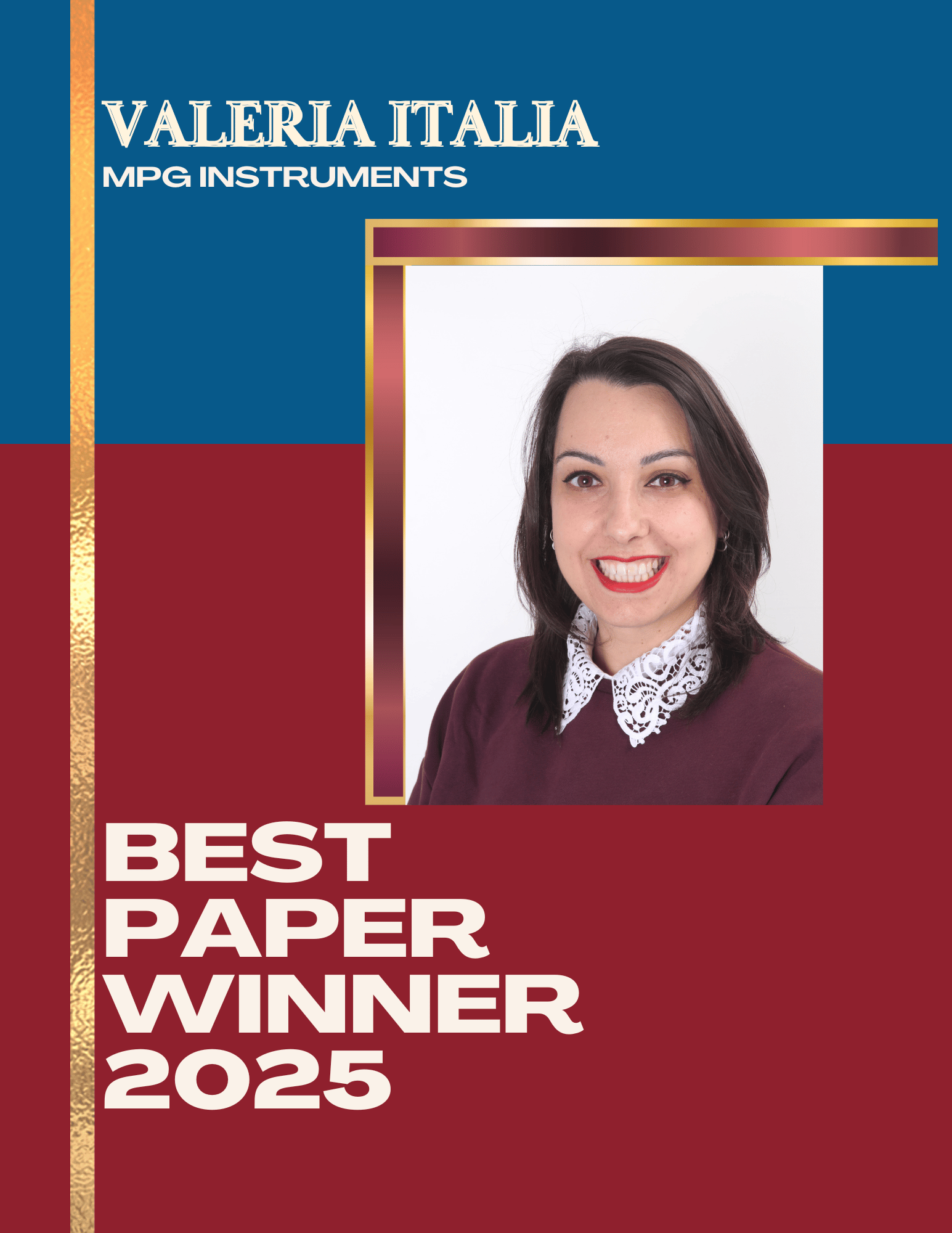
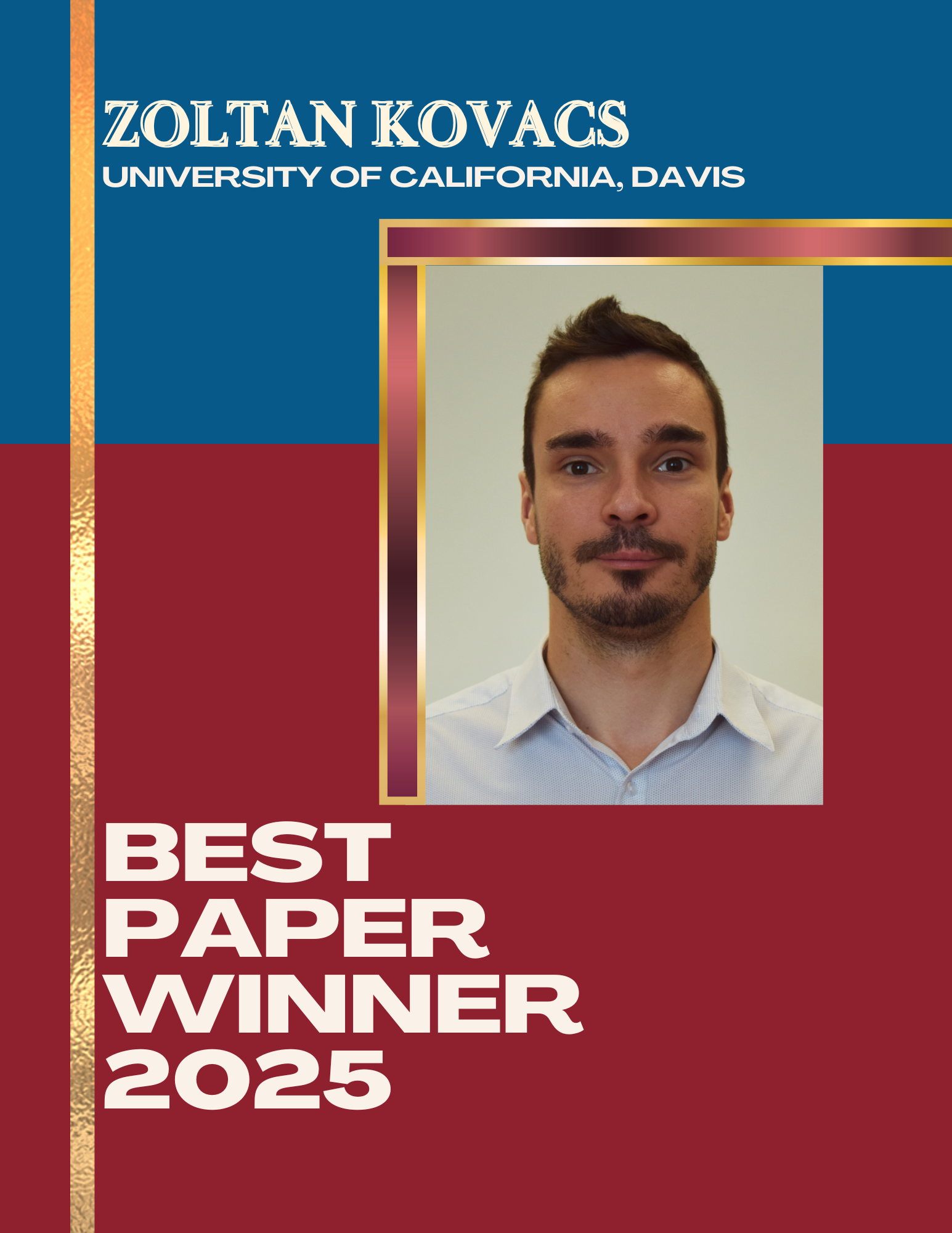
Congratulations to our 2025 Best Paper Winners Valeria Italia, MPG Instruments; and Zoltan Kovacs, University of California, Davis.
 |
|
 |
As a Ph.D. student in a cotutelle program between Swansea University and Université Grenoble-Alpes Valeria Italia focused her research on Ultrabithorax (Ubx) protein and its ability to form materials through a multistep assembly process. She demonstrated that simple parameters, such as protein concentration and buffer conditions, can be tuned to create new Ubx-based materials with distinct structural properties in a fast and cost-effective way.
Her mentor, Mauro Cortese, shared: “I am truly pleased to learn that Valeria has received this recognition. Her approach to work clearly reflects the scientific method, rigor and analytical mindset she developed through her academic and PhD experience. Valeria combines strong professional discipline with genuine empathy in the way she manages relationships with colleagues, enabling her to build trust, connect multidisciplinary expertise and drive projects toward valuable outcomes. Her determination, relational intelligence and ability to work across different technical specialties make her a highly effective contributor, both in project management and in achieving meaningful technical results. |
|
Zoltan Kovacs is a Ph.D. graduate in the Department of Physiology and Membrane Biology at the University of California Davis. In his work there, they show that the genome maintenance factor human single-stranded DNA binding protein 2 (hSSB2) undergoes DNA-dependent phase separation, revealing a mechanism by which DNA-modifying complexes can be organized on single-stranded DNA stretches during genome metabolism. Together with previous work, these findings suggest that SSB-driven phase separation is an evolutionarily conserved strategy to regulate DNA metabolic processes.
His PI, Mihály Kovács, shared: "This work highlights how intrinsically disordered regions and nucleic acid interactions of proteins can drive the formation of functional biomolecular condensates in eukaryotic systems. Our results bear implications on how genome maintenance machineries are dynamically organized, and how genome metabolic processes can be adapted across different biological contexts." |
Previous Recipients
- 2024: Jessica Lusty Beech, Montana State University; Matteo Cagiada, University of Copenhagen
- 2023: Evan Liechty, University of Colorado; Sophie Rizzo, Lehigh University
- 2022: Dina Listov, Weizmann Institute of Science; Gwendell Thomas, Georgia Institute of Technology
- 2021: Chelsea Vickers, Victoria University of Wellington; Ryan Woloschuk, University of Toronto; Max Reed, University of Toronto
- 2020: Yu-Ting Huang, National Chung Hsing University; Samuel Junod, Temple University; Joseph Kelich, Temple University
- 2019: Tatsuya Niwa, Tokyo University of Technology; Qingping Xu, Argonne National University; Matthew Biancalana, SymBioSis, Inc.
- 2018: Yu-Ming "Mindy" Huang, Wayne State University, and Abhay Thakur, Gene Therapy
- 2017: Minfei Su, Weill Cornell Medical College, and Chang-Ting Lin, Johns Hopkins School of Medicine
- 2016: Charlotte Milton, University of British Columbia; Zachary P. Schaefer, University of Chicago
- 2015: Tracy Clinton, US Air Force, and Michael Thompson, University of California, San Francisco
|